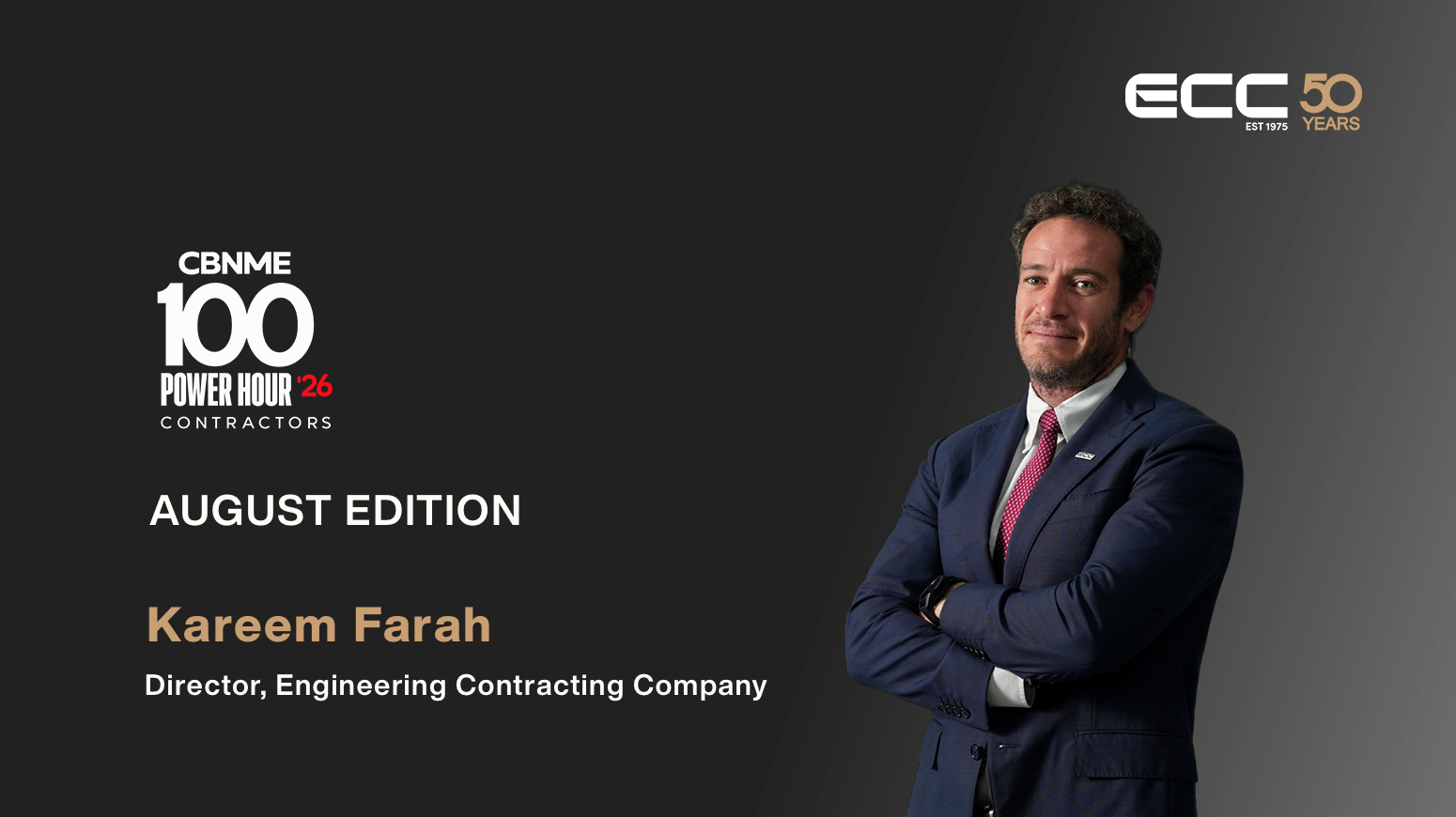
Engineering Contracting Company (ECC Contracting) has been featured in Construction Business News Middle East’s Power Hour 100 – Contractors, recognising the company’s continued growth, project delivery capabilities and contribution to the region’s construction sector.
In an interview with Construction Business News Middle East, ECC Contracting Director Kareem Farah shared insights into the company’s recent achievements, digital transformation and plans for sustainable regional growth.
Farah revealed that ECC Contracting completed four projects with a combined value of AED 10.3 billion between 2025 and July 2026, including AED 2.8 billion worth of projects delivered during the reporting period. He also identified W Residences Dubai Harbour as one of the company’s proudest recent achievements.
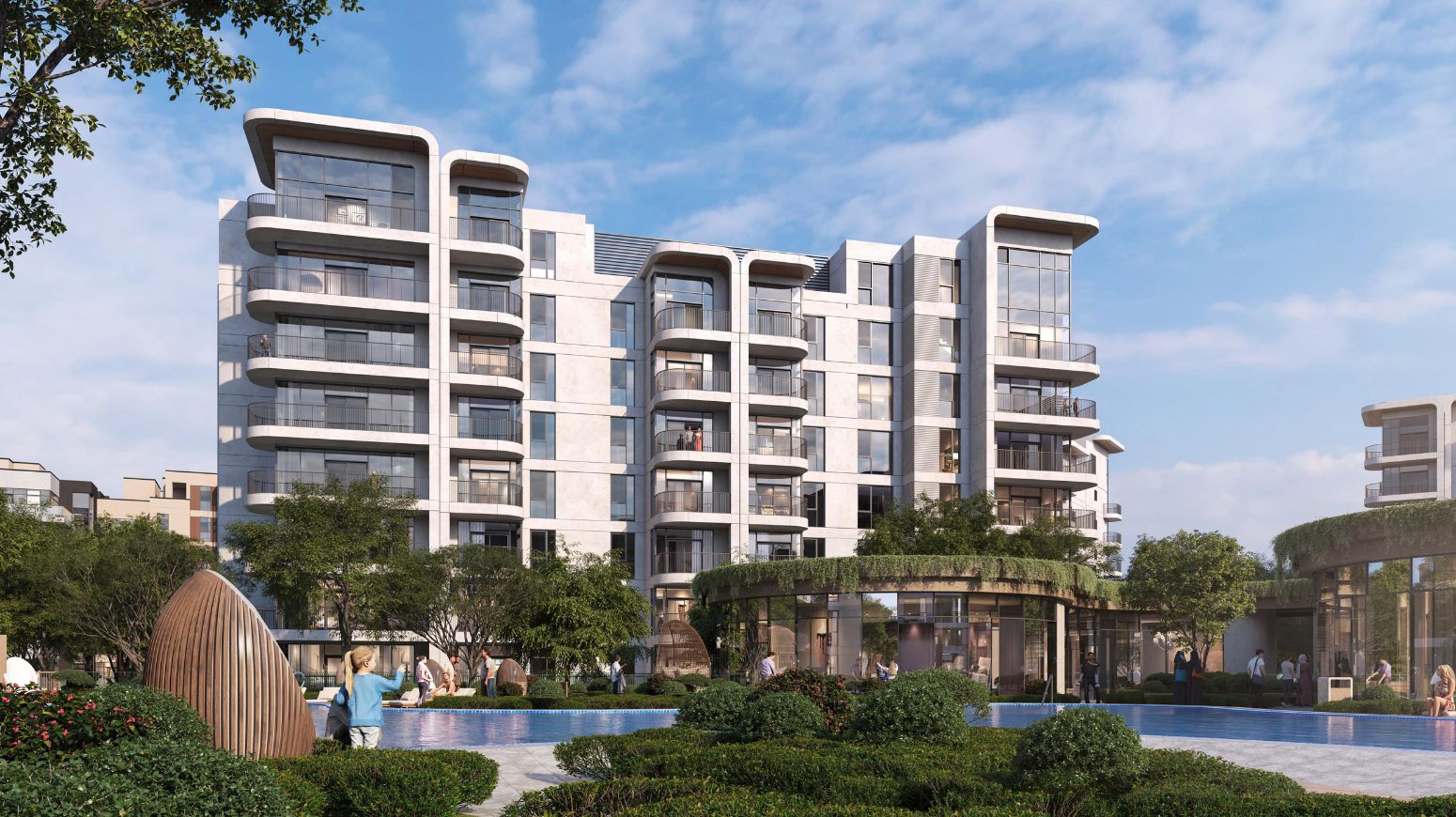
Awarded by Arada in January 2026, the development comprises two 42-storey towers connected by a shared podium. Spanning approximately 210,000 square metres, it will feature 487 luxury apartments and a 200-metre pool. The project also represents repeat business for ECC Contracting and builds on the company’s track record of delivering complex, high-profile developments.
ECC Contracting currently has 12 projects under construction or approaching completion across the GCC, supported by a workforce of 6,894 employees representing 37 nationalities.
From Technology Consumer to Technology Producer
A central theme of Farah’s interview is ECC Contracting’s transition from using off-the-shelf digital tools to developing proprietary technology tailored to its operations.
The company has created an in-house building information modelling automation suite for Autodesk Revit and Navisworks. Processes that once took several days can now be completed within hours, while reports that previously required a full day can be generated in minutes.
“We have moved from being a consumer of BIM software to a producer of proprietary BIM capability,” Farah said.
According to Farah, these automated workflows have produced time savings of between 60 and 90 per cent, while eliminating an estimated AED 200,000 to AED 500,000 in annual third-party licensing costs.
ECC Contracting has also embedded a secure, offline artificial intelligence assistant that explains results generated by validated rule engines without independently making engineering decisions. This approach allows the company to benefit from AI-supported processes while maintaining technical oversight and accountability.
Automation has delivered measurable improvements beyond engineering. Robotic process automation has reduced human resources screening from 31 hours to one hour and shortened document-processing times by approximately 70 per cent.
Building Resilience Through an Integrated Ecosystem
Farah identified material-price volatility, increasing project complexity and tightening carbon and digital compliance requirements as some of the construction sector’s most significant risks over the next 24 months.
ECC Contracting is responding through an integrated ecosystem covering design, manufacturing, mechanical, electrical and plumbing services, and joinery. This structure reduces dependence on external suppliers and gives the company greater control over quality, cost and delivery schedules.
The company is also expanding the use of prefabricated bathroom and kitchen pods through Volta Pods, supporting faster and more predictable project delivery.
Sustainability remains another important area of development. ECC Contracting is integrating lower-carbon materials such as DesertBoard’s Palm Strand Board into its projects. The board is estimated to sequester approximately 34 million kilograms of carbon dioxide equivalent.
Farah described DesertBoard’s development as a defining professional experience, noting the scale and focus required to establish the industrial start-up.
Looking Beyond Dubai
ECC Contracting’s outlook remains closely aligned with the Dubai 2040 Urban Master Plan, which is expected to support continued demand across residential, commercial and mixed-use developments, as well as major urban and infrastructure-linked projects.
At the same time, the company is evaluating further expansion beyond Dubai, including opportunities in Saudi Arabia and adjacent contracting sectors.
Farah believes the construction industry is moving away from fragmented delivery models towards more integrated design-and-build approaches supported by digital tools, lean working practices and stronger coordination between design and execution teams.
When asked to describe the future of the GCC construction market in one word, his answer was clear: “Resilience.”
Read the full interview with Kareem Farah here (Page 63)